
Corporate Culture
Play Corporate Culture
Corporate Culture Screenshots












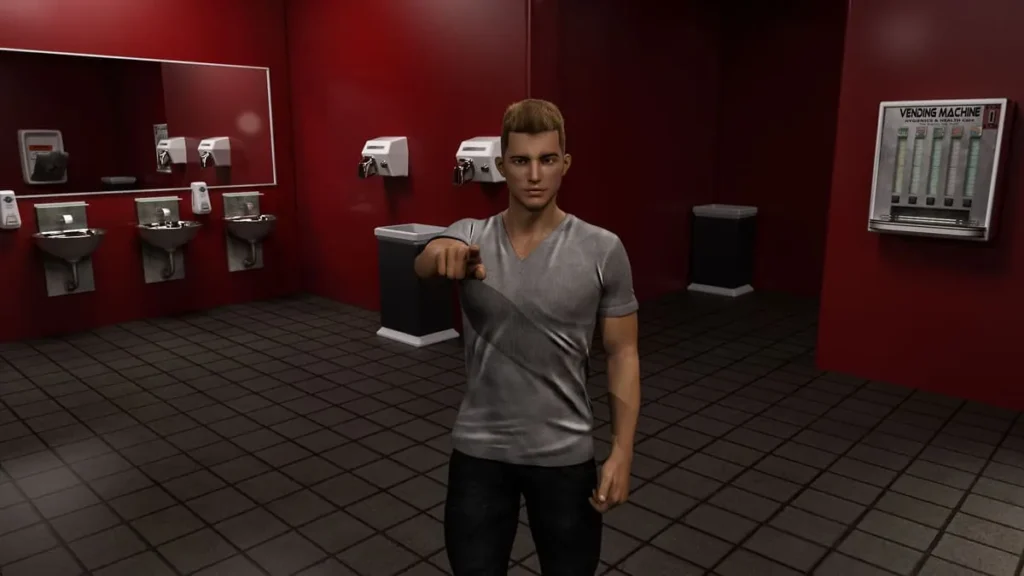









Corporate Culture review
Understanding organizational behavior through interactive gameplay mechanics
Corporate Culture stands as a unique exploration of workplace environments and organizational hierarchies through interactive gameplay. This indie title delves into the complexities of office dynamics, employee relationships, and the often-unspoken rules that govern professional spaces. Whether you’re interested in narrative-driven games that tackle social themes or seeking to understand how game design can critique modern work environments, Corporate Culture offers a compelling experience. The game challenges players to navigate intricate social systems while questioning the nature of corporate structures and human behavior within them.
Game Overview and Core Mechanics
Ever sat at your desk, feeling like a cog in a vast, incomprehensible machine? 😩 You make a suggestion in a meeting, only to watch it vanish into the ether. You try to build a positive relationship with a coworker, but office politics throw up an unexpected wall. We’ve all been there. What if you could not only understand those frustrating dynamics but actually play with them? That’s the brilliant, sometimes painful, magic of Corporate Culture. This isn’t just another management sim; it’s a razor-sharp, narrative-driven corporate game that holds up a mirror to the modern office and hands you the controls.
At its heart, Corporate Culture is an indie game workplace simulation that transforms abstract concepts like morale, influence, and organizational inertia into tangible, interactive systems. You don’t just read about toxic positivity or innovation-stifling bureaucracy—you navigate it, make choices within it, and live with the consequences. It turns the study of organizational behavior in gaming into a deeply personal experience. So, how does the Corporate Culture game work? Let’s boot up the simulator and dive into its unique, often unsettling, world.
What Makes Corporate Culture Unique
Forget corner offices and stock market tycoon fantasies. 🎯 What sets Corporate Culture apart is its relentless focus on the human layer of the corporate world. While other games might let you build a skyscraper or manage a supply chain, this game asks you to manage relationships, perceptions, and the fragile ecosystem of a team. Its uniqueness lies in three core pillars: its tone, its perspective, and its purpose.
First, the tone. Corporate Culture masterfully walks a tightrope between satire and sobering commentary. One moment, you’re chuckling at a painfully accurate parody of corporate jargon in a company-wide memo. The next, you’re facing a genuine ethical dilemma that leaves you staring at the screen, paralyzed by choice. It uses humor not to dismiss the subject, but to disarm you, making the subsequent moments of drama and tension hit even harder.
Second, the perspective. You’re not the all-powerful CEO from day one. You might start as a new hire in a mid-level team, or a manager trying to inspire a disillusioned department. This ground-level view is crucial. You experience the ripple effects of upper management’s decisions, feel the weight of unclear KPIs, and have to build credibility from scratch. This approach makes the indie game workplace simulation feel authentic and grounded.
Finally, its purpose is revelation, not just recreation. The game is designed to be a sandbox for social and professional experiments. I remember one playthrough where I decided my character would be a relentless optimist and “yes-person,” agreeing to every request to build goodwill. The result? My team’s workload became unsustainable, quality plummeted, and my once-friendly colleagues grew resentful of my empty promises. The game showed me, in stark terms, the difference between being likeable and being respected. It’s this kind of practical insight that moves it beyond entertainment into the realm of meaningful reflection.
The game’s greatest strength is its ability to make you feel the tension between individual ambition and collective well-being. You’re constantly asking: “Do I win this project for my own career, or do I collaborate and share the credit?”
It’s this blend of sharp writing, relatable scenarios, and systemic cause-and-effect that defines the Corporate Culture game mechanics. You’re not managing resources; you’re managing meaning, motivation, and the messy human stories that every office contains.
Gameplay Systems and Player Agency
So, how does the Corporate Culture game work on a practical level? 🕹️ It’s built on interconnected systems that translate your choices into tangible shifts in the office landscape. This is where the concepts of player choice and agency in games are explored with remarkable depth. Your agency isn’t about choosing a mission from a board; it’s about deciding who you are and how you navigate within a living, reactive social structure.
The core interface is your character’s dashboard, featuring several key metrics that are in constant flux:
- Influence: Your ability to sway decisions and rally people to your cause.
- Team Morale: The overall happiness and cohesion of your direct colleagues.
- Corporate Capital: A measure of your standing with upper management.
- Personal Stress: Your own mental and emotional bandwidth.
Every decision you make—from how you run a meeting to how you handle a missed deadline—impacts these metrics. The real genius of the Corporate Culture game mechanics is that these stats are often in direct conflict. Raising Team Morale might require pushing back against an unrealistic deadline, which could lower your Corporate Capital. Chasing a promotion (boosting Influence) might involve political maneuvers that crater Team Morale.
Let’s look at a concrete example of player choice and agency in games within Corporate Culture.
Example: The Launch Deadline Crisis
You’re the project lead for a software launch. Two weeks before launch, a senior tester finds a major, time-consuming bug. You have a menu of choices, each with systemic repercussions:
- “Crunch is part of the job!”: Enforce mandatory overtime to fix it. This might get the build stable (saving Corporate Capital) but will skyrocket team stress and erode Morale long-term.
- “We need to be honest.”: Advocate to delay the launch. This will build immense trust with your team (boosting Morale) but could make you look weak or incompetent to executives (damaging Influence and Corporate Capital).
- “Find a workaround.”: Push for a temporary patch that hides the bug. A politically savvy, short-term fix that pleases management initially (small Influence gain), but sets a ticking time bomb that will explode later, potentially devastating all metrics.
The game doesn’t judge you with a “good” or “bad” ending for this single choice. Instead, it weaves your decision into the narrative-driven corporate game fabric. Choose the crunch, and you might see a star employee quit three “weeks” later. Delay the launch, and you may earn the unwavering loyalty of your team, giving you a powerful ally for a future political battle. This is organizational behavior in gaming at its finest—showing how single decisions create cultural norms and behavioral cycles.
| Player Action | Immediate System Effect | Long-Term Narrative Consequence |
|---|---|---|
| Publicly credit a shy colleague’s idea | +Team Morale, +Influence (as a fair leader) | That colleague becomes a vocal supporter; may confide crucial info later. |
| Take sole credit for a team success | +Corporate Capital (personal recognition), -Team Morale | Team becomes secretive; collaboration on future projects suffers. |
| Blame a failure on a systemic issue | -Corporate Capital (avoids personal blame), +/-Morale | Management sees you as a “big picture” thinker, or as someone who avoids accountability. |
Progression is tied to these evolving relationships and reputations, not just a XP bar. You “advance” by successfully navigating crises, building a coalition of allies, and completing projects that align with the company’s (or your faction’s) shifting goals. The office itself changes—new hires arrive, disgruntled employees leave, the décor shifts after a rebrand—making the game world feel alive and responsive to the story you’re co-creating. This responsive world is the engine of its interactive storytelling mechanics.
Narrative Structure and Storytelling Approach
If the gameplay systems are the skeleton, the narrative is the soul and nervous system of Corporate Culture. 📖 This isn’t a story with a single plot; it’s a web of interconnected character arcs, corporate lore, and emergent drama that unfolds based on your presence. The narrative-driven corporate game approach here is reactive and branching, designed to make you feel like both an author and a participant in a sprawling office novel.
The story is framed around a central, overarching tension within the company—perhaps a merger, a risky new product direction, or a cultural overhaul initiated by a new CEO. This “macro” plot provides context, but the real story happens in the “micro” moments: the coffee break conversations, the tense one-on-one reviews, the after-work drinks where true feelings slip out.
Characters are not just quest-givers; they are fully realized agents with their own motivations, insecurities, and alliances. Your relationship with each is tracked on a dynamic scale that goes beyond “friend/enemy.” You might have a colleague who is a Competitive Ally—you respect each other and can work together, but you’re both vying for the same promotion. Another might be a Loyal Protege who will defend you in meetings but requires mentorship and protection in return. The game’s interactive storytelling mechanics shine as you learn their backstories through optional conversations, unlocking deeper layers of motivation that can inform your strategy.
The narrative delivery is multifaceted:
* Email Chains: The primary source of formal communication, ripe with subtext. Who is CC’d? Who is left off? What’s the tone?
* Instant Messages: The informal, real-time pulse of the office. This is where gossip spreads, alliances are forged, and true opinions are shared (or carefully hidden).
* Meeting Dialogues: The key moments of performative decision-making. You often choose not just what to say, but how to say it—passionately, analytically, diplomatically, or aggressively.
* Environmental Storytelling: The state of the break room, the artwork in the lobby, the type of snacks provided—all subtly reflect the company’s current financial health and cultural priorities.
Your choices directly sculpt the narrative’s path. There is no “canon” story of Corporate Culture. In one playthrough, you might lead a grassroots movement that humanizes the workplace. In another, you might become a master of political manipulation, climbing the ladder over the backs of former friends. The game presents different philosophical perspectives on work itself through its characters: the idealist, the cynic, the careerist, the work-life balance advocate. You are forced to engage with these perspectives, deciding which, if any, you will embody.
This is where the game answers the final part of how does the Corporate Culture game work: it works by making narrative consequence feel inevitable and earned. If your team falls apart, you’ll see the exact chain of emails, failed conversations, and poor decisions that led there. If you succeed in transforming your department, you’ll witness the small moments of gratitude and renewed passion. It shows that “corporate culture” isn’t a poster on the wall; it’s the sum total of a thousand daily interactions, and you have the power to alter its equation.
By blending its sharp Corporate Culture game mechanics with profound player choice and agency in games, this indie game workplace simulation does more than simulate an office—it provides a safe space to experiment, fail, and understand the incredible complexity of human systems. It proves that the most compelling strategy isn’t always about profit, but about people. And in today’s world, that’s a lesson worth playing through. 🎮✨
Corporate Culture represents an important entry in the landscape of games that use interactive storytelling to explore serious social themes. Through its mechanics, narrative choices, and character interactions, the game invites players to examine their own assumptions about workplace environments and organizational behavior. Whether you approach it as a critique of modern corporate structures or as a character-driven narrative experience, Corporate Culture offers meaningful engagement with themes that resonate in contemporary work culture. For those interested in indie games that challenge conventional thinking or in understanding how game design can facilitate social commentary, Corporate Culture deserves attention. The game’s exploration of human relationships within institutional frameworks provides both entertainment and food for thought about the spaces where we spend significant portions of our lives.