
Karryn’s Prison Screenshots







Karryn’s Prison review
A comprehensive guide to the indie simulation game’s unique mechanics and player experience
Karryn’s Prison stands out as a distinctive indie simulation title that blends multiple gameplay genres into a cohesive experience. The game follows Karryn, who assumes the role of warden at a notable correctional facility, navigating complex management systems and character progression mechanics. Players engage with an intricate blend of prison management simulation, character development systems, and strategic decision-making. The game has garnered attention for its polished integration of gameplay mechanics with narrative progression, offering players approximately 12 hours of content on standard difficulty settings. Understanding the core mechanics and features helps potential players determine if this indie title aligns with their gaming preferences.
Core Gameplay Mechanics and Systems
Ever feel like you’re juggling too many plates at once? Welcome to the warden’s office. Karryn’s Prison gameplay mechanics throw you headfirst into the chaotic, rewarding, and deeply interconnected systems of running a correctional facility that’s always on the brink of chaos. This isn’t just about locking doors; it’s a masterclass in strategic multi-tasking where every decision ripples through your character, your inmates, and the very story you’re trying to tell. At its heart, this prison management simulation game brilliantly fuses spreadsheet-like logistics with a personal, character-driven journey, creating an experience that’s as much about managing resources as it is about managing your own moral compass. Let’s break down the core systems that make this indie title so uniquely compelling. 🏛️⚖️
Prison Management and Warden Responsibilities
Your first day on the job is a baptism by fire. As Warden Karryn, you’re not just a figurehead; you’re the chief executive officer, HR manager, security director, and morale officer of a notoriously troublesome prison. The warden management gameplay is a constant, engaging loop of observation, delegation, and direct intervention. You’ll be checking security monitors, assigning guards to patrol routes, managing the prison’s finances, and ensuring the kitchen doesn’t run out of food—all while the clock is always ticking toward the next potential crisis.
The brilliance of these sandbox simulation features is the freedom they offer. There’s no single “right” way to manage your facility. Want to run a tight ship with an iron fist, maximizing security and work output? You can. Prefer a more… rehabilitative approach, focusing on inmate satisfaction to keep the peace? That’s a valid path too. This freedom is central to the prison management simulation game experience. You’re building your own style of leadership from the ground up.
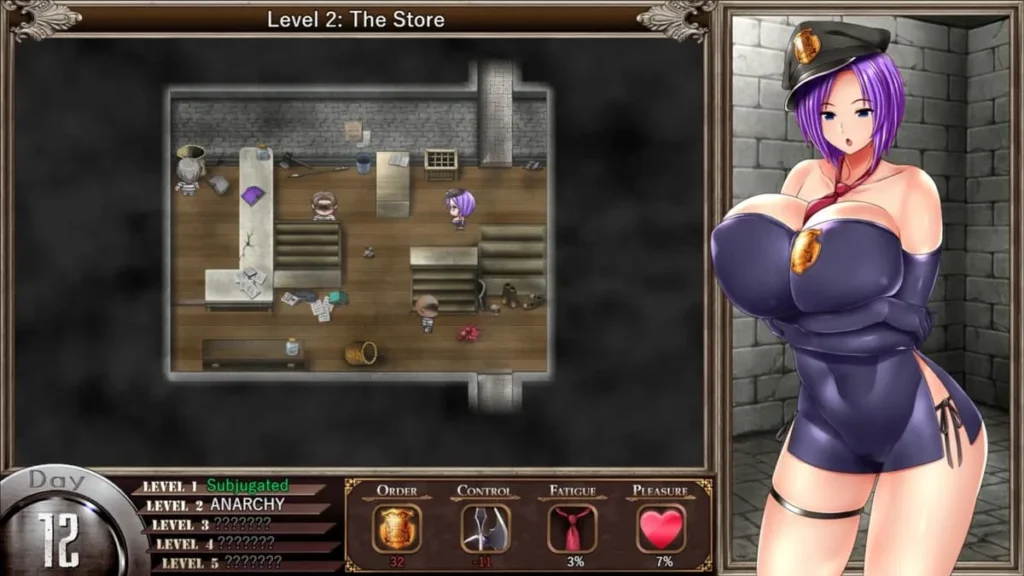
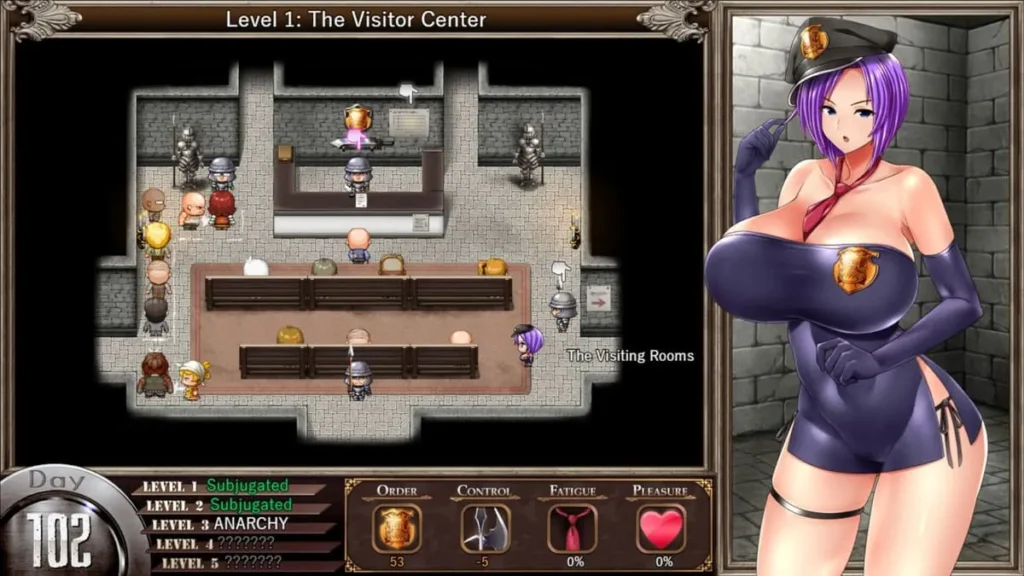
A huge quality-of-life feature that reviewers rightly praise is the passive system. Once you’ve set your daily schedule and assigned tasks, you can hit the “Pass” button to advance time. This isn’t just a fast-forward button; it’s the engine of the gameplay loop. It allows you to simulate the outcomes of your management decisions without micro-managing every single second. You set the plan, hit pass, and watch the consequences—good or bad—unfold. This creates a fantastic rhythm between active, hands-on problem-solving and strategic, big-picture planning. The clean, informative UI is a big help here, presenting complex data on inmate status, facility operations, and resource levels at a glance, which keeps the gameplay speed satisfying and fluid.
To give you a quick overview of how these major systems interact, here’s a breakdown:
| Gameplay System | Key Features | Direct Player Impact |
|---|---|---|
| Facility Management | Room construction/upgrades, resource allocation (food, money), guard assignment, schedule setting. | Determines daily operational efficiency, income generation, and baseline inmate stability. |
| Inmate Interaction | Direct conversation, punishment/reward commands, task assignment (cleaning, crafting), conflict resolution. | Directly influences individual inmate loyalty, work output, and their propensity to cause trouble. |
| Security & Surveillance | Monitor system, patrol routes, contraband checks, unlocking new security protocols. | Controls the flow of information and your ability to preempt riots or other major incidents. |
This triad of responsibilities means you’re constantly shifting perspectives—from macro-manager to micro-manager—which makes the 10-12 hour completion time feel densely packed with meaningful decisions. There’s very little filler. The sandbox simulation features mean you can spend extra time optimizing and experimenting, but the core narrative and progression are respectfully paced to keep you moving forward. 🕐📊
Character Progression and Corruption Mechanics
Now, here’s where Karryn’s Prison separates itself from any other management sim. While you’re managing the prison, you’re also managing yourself. Karryn isn’t a static avatar; she has her own stats, skills, and a transformative meter that is the soul of the game: the character corruption system.
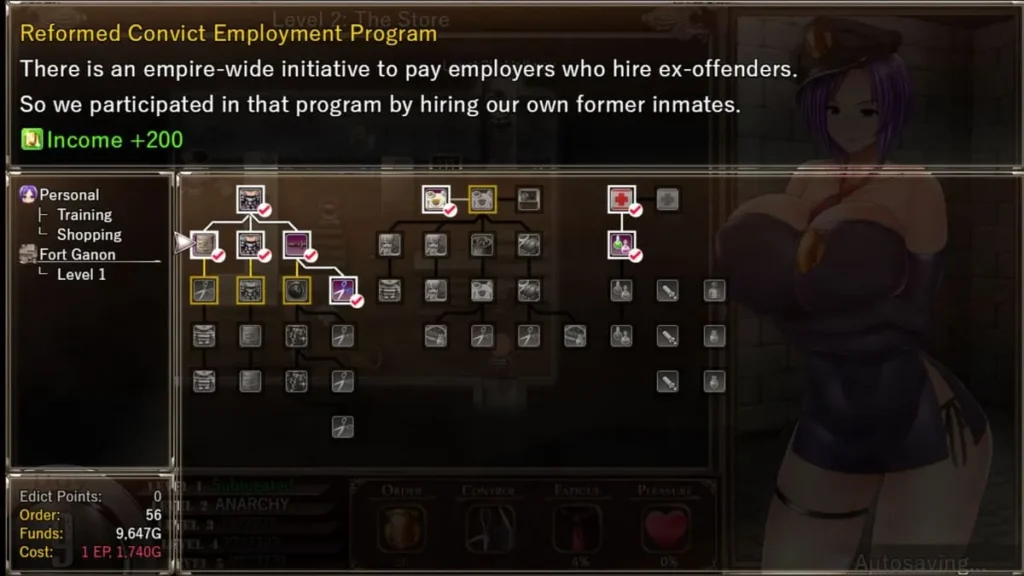
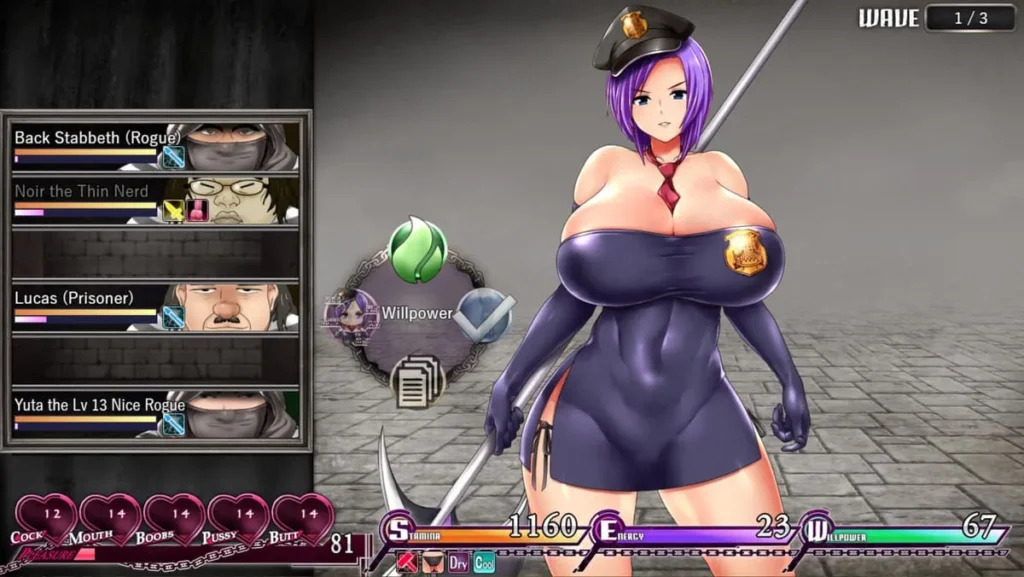
Think of it as a dual-layered character progression system. On one layer, you have classic JRPG mechanics indie game fans will recognize. Karryn gains experience from her daily activities, levels up, and earns points to invest in a skill tree. These skills are pragmatically warden-focused, unlocking abilities like better negotiation tactics, improved surveillance analysis, or more effective punishments. This system grounds you in a familiar and satisfying loop of growing personal power to better handle your job.
The second, and utterly fascinating, layer is the corruption meter. This isn’t a simple “good vs. evil” slider. It’s a nuanced measure of Karryn’s changing perspective, resilience, and methods in response to the relentless pressures of her job. Inmate interactions, certain choices in events, and failing to maintain control can all cause this meter to rise. What’s masterful is how this system intertwines with everything else.
Personal Insight: On my first playthrough, I fought tooth and nail to keep corruption at zero, seeing it as a “failure” state. I later realized I was missing the point. The game isn’t punishing you for becoming corrupted; it’s chronicling a transformation. Some of the most powerful skills and narrative paths are only accessible by engaging with this system.
Corruption unlocks its own parallel set of skills and dialogue options. It literally changes how Karryn can solve problems. A pure, by-the-book warden might try to reason with a troublesome inmate. A more seasoned, corrupted warden might have access to a more persuasive, if morally ambiguous, set of tools. This isn’t just a narrative flavor—it radically alters strategic decision-making. Do you resist corruption to maintain your initial ideals, or do you embrace its power to more efficiently control an uncontrollable situation? This fusion of JRPG mechanics with a character corruption system creates a profoundly personal journey where your managerial style directly shapes who Karryn becomes. 🎭🔓
The character progression system is therefore a constant push-pull. You’re strengthening Karryn’s official capabilities as a warden while simultaneously navigating her personal erosion or evolution. It makes every action, even passive time progression, feel consequential to her story.
Strategic Decision-Making and Player Agency
All these systems converge on a single point: your choice. Karryn’s Prison is a game built on meaningful player agency. Every day presents a series of crossroad moments, from tiny administrative choices to major narrative branches. The game’s structure ensures these aren’t empty decisions; they have tangible, often immediate, effects on both your management success and Karryn’s personal arc.
The sandbox simulation features provide the canvas, but your choices paint the picture. How you balance your time is the first major strategic layer. Do you spend the morning personally inspecting cells for contraband, or do you review financial reports to plan a new facility wing? The former might prevent a nighttime incident, while the latter could increase your long-term revenue. There’s no autopilot.
This agency shines brightest when the game’s systems collide. The prison management, character progression, and corruption mechanics are not isolated silos—they’re in constant conversation. A problem in one area can often be solved by leveraging progress in another.
Here’s a concrete example of this interplay: You discover a group of inmates planning a riot via the surveillance system (Prison Management). You have several options, each with different systemic consequences:
* Option A (The Warden’s Authority): Use your high-level “Discipline” skill (Character Progression) to personally break up the ring and throw the leader in solitary. This maintains order and might boost guard morale, but it could increase general inmate resentment.
* Option B (The Corrupted Compromise): If your corruption is high enough, you might have a unique dialogue skill that lets you covertly recruit the ringleader as an informant (Corruption System). This stops the riot immediately and gives you future intelligence, but it requires you to offer favors, deepening your corruption and potentially losing control if your new informant turns on you.
* Option C (The Hands-Off Approach): Order a lockdown and assign all guards to high-alert patrols (Prison Management). This might stop the riot through sheer show of force but will drain your resources, halt all work productivity for the day, and doesn’t address the underlying dissatisfaction.
This is the core strategic loop. You’re not just picking a dialogue option; you’re deploying a combination of your managerial resources, Karryn’s developed skills, and her current state of mind. The warden management gameplay is the “what,” and your strategic decision-making informed by progression and corruption is the “how.”
This density of choice also affects gameplay pacing. You can rush through days focusing only on core tasks, likely facing stiffer challenges due to neglected systems. Or, you can engage deeply with every inmate and side activity, which fleshes out the world and can unlock alternative solutions to problems. The balance between dialogue, short but expressive animations, and active management feels carefully calibrated. The animations for key actions are just long enough to give events weight but never so long that they interrupt the strategic flow.
Ultimately, the player agency in Karryn’s Prison makes it feel uniquely yours. The gameplay mechanics serve a singular goal: to ensure that the story of the prison, and of Karryn herself, is a direct product of the thousands of small decisions you make while simply trying to get through the day. It proves that in a great simulation, management isn’t just about resources—it’s about people, principles, and the price of power. 🤔⚙️
Karryn’s Prison delivers a distinctive gaming experience by seamlessly integrating prison management simulation with character-driven narrative progression. The game’s strength lies in its polished mechanics that blend JRPG elements with sandbox gameplay, creating a system where player choices meaningfully impact both story and character development. The corruption mechanic serves as more than a gameplay feature—it becomes the narrative backbone that connects mechanical progression with character arc. While some players note that UI design and pacing could be optimized for faster gameplay flow, the overall experience offers substantial content with approximately 12 hours of engaging gameplay. For players interested in indie simulations that prioritize mechanical depth and narrative integration, Karryn’s Prison represents a thoughtfully designed title that rewards strategic thinking and player engagement.